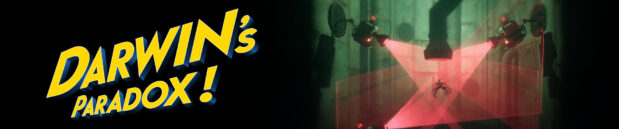
Thoughts on: Darwin’s Paradox!

Making cinematic platformers is hard. The “cinematic” part of it usually means that developers need to introduce enough variety and also fun unexpected twists and moments, while also somehow making sure that the pace of the game feels very tight, with no moments that would drag on. This also means that the best examples of the genre tend to be relatively short experiences, clocking under 4-5 hours if you do things well. Which makes sense – as with a good movie or a theater play, you wouldn’t sit through a longer runtime, it will simply start to get boring. Usually only puzzle-focused type of these games, or outright puzzle platformers, take longer to complete, since those games focus more on systemic puzzle solving, rather than an exciting adventure that keeps on moving. There are well known examples of the genre, from going back to its origins with Another World/Out of this World, to far more recent classics like INSIDE. And people seem to generally like the Little Nightmares titles, even though I find them a bit too boring. There are even some great but more “underground” examples like The MISSING: J.J. Macfield and the Island of Memories.

Darwin’s Paradox!, based on its initial showings and a demo, had a lot of promise. Octopus as the main character, who can stick to surfaces and shoot ink, in itself opened up a lot of possibilities for fun shenanigans, and the American 1950s pulp as the tone seemed really fun too. As I was playing the game’s initial sections I was occasionally frustrated, but always wanted to ignore those annoyances, because the game simply had too much charm. But as I kept playing, the game started dragging on, until by the end I was constantly on the verge of just dropping the game entirely. Which is a real shame.

Read more“Thoughts on: Darwin’s Paradox!”

Думки про: Darwin’s Paradox!

Створювати ігри в жанрі cinematic platformer складно. Бо “кінематографічність” означає, що в грі повинно бути достатньо різноманіття і сюрпризів, але також при цьому, гра повинна мати ідеальний темп і не застрягати на якомусь місці надовго. Через це, більшість прикладів жанру зазвичай займають не більше 4-5 часів на проходження. І це логічно, бо від фільму чи театральної постанови ви не очікували б довшого часу, інакше вам набридне це дивитись. Тож ігри, які займають більше часу або більше акцентують загадки, або повністю стають прикладами puzzle platformer жанру, бо люди тоді більше зацікавлені в системному вирішенні проблем, ніж в пригоді, яка постійно кудись рухається. Існує купа дуже відомих прикладів жанру, від класики типу Another World/Out of this World до сучасної класики типу INSIDE. Також людям подобалась серія Little Nightmares, хоча мені персонально перша гра здалась трохи нудною. Є навіть більш “культові” приклади, типу The MISSING: J.J. Macfield and the Island of Memories.

Після проходження демо версії, я очікував, що Darwin’s Paradox! мене приємно здивує. Восьминіг в ролі головного героя – цікава ідея, бо можна бризкати чорнилом та ходити по стінах. Та й тон гри, в стилі дешевої американської фантастики 1950-их про прибульців був цікавим. Тож, навіть коли деякі моменти на старті гри мене трохи дратували, мене це не сильно хвилювало, бо гра була занадто харизматичною. Але чим довше я грав, тем менше в мене залишалось терпіння. І під кінець проходження, я постійно думав про те, чи варто навіть продовжувати грати.

Read more“Думки про: Darwin’s Paradox!”

In love with: Sword of the Sea

Journey by thatgamecompany has been rightfully considered a classic for over a decade now, a perfect culmination of ideas the team has played with up until that point. But when several team members left and created their own studio Giant Squid, their first project Abzû was highly liked, but never reached the same cult status. Which is a real shame, because it is one of the most beautiful and medidative games I’ve ever played with really fun movement. A few years later, the team followed it up with The Pathless, another game with really cool movement, but that one I did not finish. It felt like a very odd mix of open world-ish design with the meditative pace of Abzû (that had linear levels), so the end result to me felt very boring. Several years later still, the team decided to mix the best ideas they’ve had in all projects since Journey into Sword of the Sea and it’s really fun.

Read more“In love with: Sword of the Sea”

Зачарований: Sword of the Sea

Journey від thatgamecompany вже більше десяти років вважають класикою, кульмінацією всіх ідей компанії, з якими вони експериментували до того. Після виходу проекту з команди пішло декілька людей, які створили нову студію Giant Squid, яка випустила Abzû – їх перший проект, який любили, але не настільки, наскільки Journey. Що дуже сумно, бо я вважаю гру однією з найбільш атмосферних і при цьому з дуже прикольним відчуттям руху. Наступним проектом студії стала The Pathless, в якому теж був дуже прикольний рух, але гру я не пройшов. Як на мене, в ній була дуже невдала спроба змішати відкритий світ з лінійною красою Abzû, в результаті чого, гра відчувалась просто нудною. Але з тих пір пройшло ще декілька років і вони вирішили поєднати всі ідеї в одну і випустити Sword of the Sea, яка виявилась дуже класною.

Read more“Зачарований: Sword of the Sea”

O tempora: Gex Trilogy

O tempora is a series of retrospective posts where I play games from ages before to see if they stood the test of time.

My taste in platformers is something some consider unnatural. Despite growing during the era when platforming games of many variations were the dominant genre of games, there were not that many I actually liked. Mario games? Nope. Sonic games? Kinda, but not really my thing. Mega Man? Nah. Classic Castlevania titles? Also no. I admire and respect a lot of entries in those series, but the closer it gets to being just a platformer or action platformer, the less likely I am to enjoy the game, usually. Especially with 2D ones. Exploration focused games, like so called “metroidvanias” I do love. But if it’s just about jumping or jumping and shooting, especially if the game is supposed to be challenging – not for me.

And while there are a lot more 3D platformers that I like, it’s not a gigantic list as well. It lacks Mario, for example. But it does include Gex: Enter the Gecko – a game I have considered to be my favorite 3D platformer for the longest time. So when this game, as part of the “whole” “Trilogy” of Gex games was announced to be re-released, I was super excited. It didn’t need to be a remaster or a remake, just a very good re-release (emulated or not) of the original titles. Gex Trilogy is not quite there, though I’m still happy it exists.

Read more“O tempora: Gex Trilogy”

О часи: Gex Trilogy

О часи — серія записів присвяченим іграм з минулого, в яких я намагаюся вирішити чи пройшли вони перевірку часом.

Мої смаки з платформерами доволі специфічні. Хоча я і ріс в епоху, коли саме цей жанр був найпопулярнішим, дуже мало з них мені подобаються. Серія Mario? Ні. Sonic? Трохи, але не моє. Mega Man? Теж ні. Класичні Castlevania? Мимо. Я поважаю більшість ігор з цих серій, але чим ближче гра механічно до просто платформера чи екшен платформера, тем менше мені цікаво грати. Особливо коли вони в 2D. Ігри про дослідження (так звані “metroidvania”) я обожнюю, але коли треба стрибати чи стрибати та стріляти і це ще й зроблено так, щоб було складно, то явно не для мене.

Серед 3D платформерів я знаходив більше проектів, які мені подобаються, але не набагато. Маріо в цьому списку все одно нема. Але є Gex: Enter the Gecko – гра яку я роками вважав своєю найулюбленішою грою з жанру. Тому, коли анонсували “трилогію”, частиною якої вона типу є, в перевиданні, я дуже зрадів. Мені не потрібен ремастер чи рімейк, достатньо просто якісного перевидання (навіть на емуляторі). Gex Trilogy цю задачу виконало задовільно.

Read more“О часи: Gex Trilogy”

O tempora: Sonic Origins Plus

O tempora is a series of retrospective posts where I play games from ages before to see if they stood the test of time.

I watched my friends play Sonic games a lot, I played Sonic games a fair bit, the style, the soundtracks, the Knuckles himself… So many memories about these games that… I don’t love that much, if I’m honest. I’m not much into platforming games in general, unless they focus on exploration and/or puzzle solving, so despite the era of games I grew up with having so many great (and not great) examples of the genre, I didn’t play a lot of them much or at all. But after replaying Sonic Generations for the Sonic X Shadow Generations release that I really liked, I was in the mood for more Sonic. So after giving Frontiers a try and getting frustrated with it after a few hours (even though it has so many things done so well), I’ve decided to finally play Sonic Origins with the Plus expansion. And this return to the classics was somewhat predictable, but still necessary for me.

Read more“O tempora: Sonic Origins Plus”

О часи: Sonic Origins Plus

О часи — серія записів присвяченим іграм з минулого, в яких я намагаюся вирішити чи пройшли вони перевірку часом.

Я дивився як мої друзі проходили ігри про Соніка, сам грав в багато з них, мені подобаються саундтреки, стиль, найкращий хлопець Наклз… В мене багато класних спогадів про ці ігри, які, насправді, не настільки й сильно мені подобались. Бо я не великий любитель платформерів, окрім тих, які про дослідження чи загадки, тому величезна кількість ігор мого дитинства були “не для мене”. Але після повторного проходження Sonic Generations, перед написанням огляду на оновлене видання Sonic X Shadow Generations, яке мені сподобалось, в мене з’явився настрій на синіх їжаків. Тому я спочатку спробував пройти Frontiers, який, на жаль, я закинув (там багато класних ідей, але також немало поганих). А потім в Sonic Origins з доповненням Plus. І відчуття від цього повернення в класику були передбачуваними, але це треба було зробити.

Read more“О часи: Sonic Origins Plus”

Happy about: Blade Chimera

There’ve been quite a lot of metroidvania titles in the past decade, however most of them now love to lean into the whole Souls-like design language, with huge emphasis on precise and punishing combat and limited healing. And there have been some fantastic examples of games done that way, some of which I could even enjoy, although in general this is entirely not my cup of tea. But apart from the great Bloodstained: Ritual of the Night, that I grew to like more as the years went by, very few games felt like a Castlevania-type metroidvania, the IGAvania, if you will. Or at least, few that seemed interesting enough to play. Blade Chimera was another such titles I didn’t get interested in at first. However, after seeing it played on streams, I found it curious enough to check it for myself. And for the most part, it is a very solid and fun game.

Read more“Happy about: Blade Chimera”

Радий: Blade Chimera

За останні десять років вийшло немало метроїдваній проектів, але на жаль, більшість з них тепер намагаються повторювати Souls-подібний дизайн і акцентувати складні бойові системи та обмеження по лікуванню. Є купа дуже класних проектів в такому стилі, деякі з яких мені навіть сподобались, але зазвичай мені такий підхід взагалі не цікавий. І окрім чудової Bloodstained: Ritual of the Night, яка мені з роками подобається все більше, інших нових Castlevania-подібних метроїдваній майже не було. Або, якщо були, то можливо не настільки цікаві, щоб я про них чув. Blade Chimera на перший погляд мені теж здалась не сильно цікавою. Але після того, як я побачив декілька проходжень гри в інтернеті, гра мене зацікавила і я вирішив пограти в неї сам. Вона виявилась дійсно прикольною.

Read more“Радий: Blade Chimera”